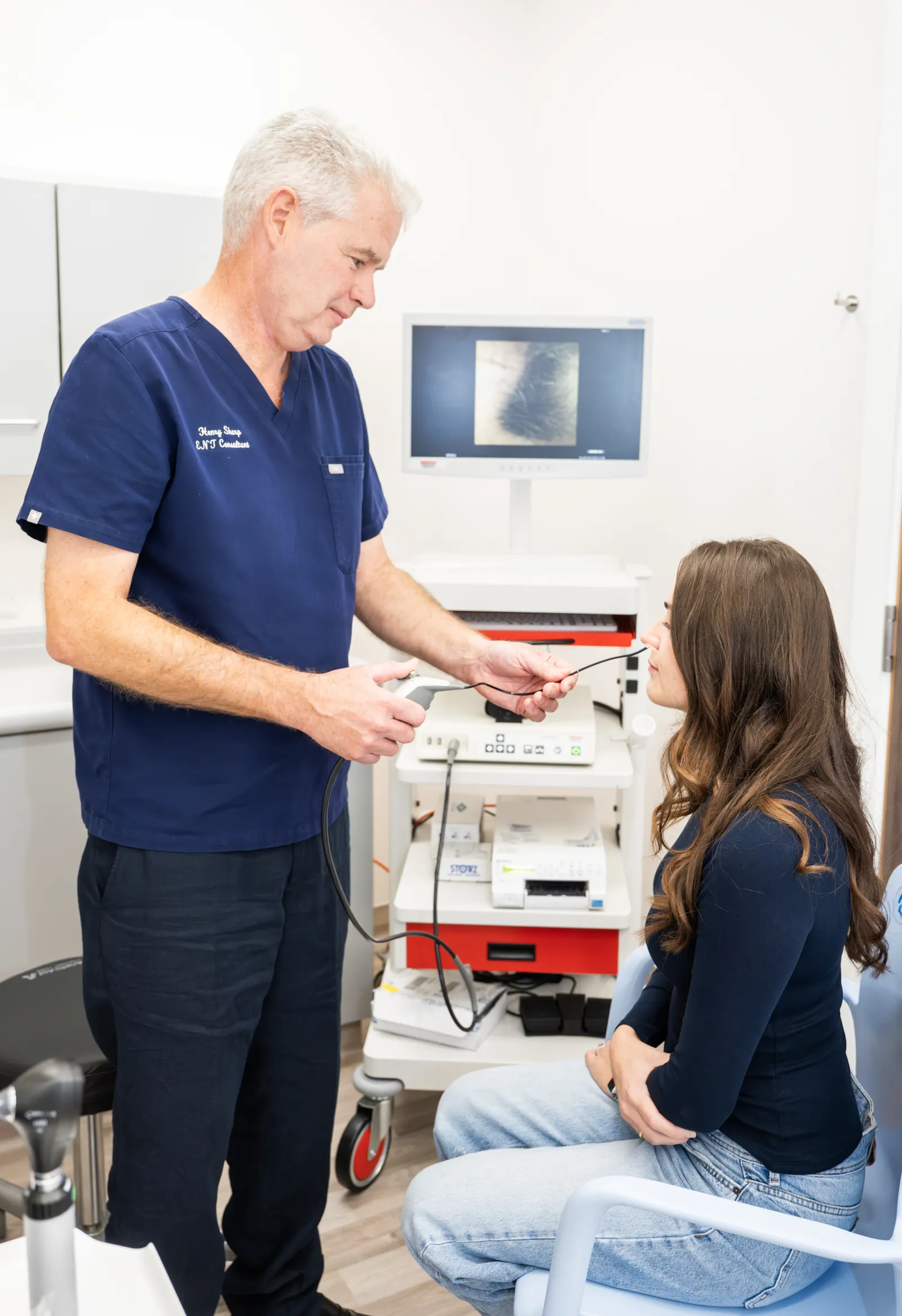
Functional endoscopic (telescopic) sinus surgery is minimally invasive surgery up inside the nostrils, using endoscopes and specially designed instruments — including mechanical shavers and, if appropriate, special balloons to widen the sinus drainage channels (balloon sinuplasty). It is individually tailored according to the findings inside each patient’s nose and on a CT scan.
The operation is performed up inside the nose through the nostrils, under general anaesthetic. There are no scars on the face. The aim is to open the sinus drainage channels and so restore the normal function of the nasal lining as far as possible. This is achieved by removing bone and inflamed lining in the narrow nooks and crannies of the sinus drainage pathways. These minute passages tend to stick together with long-standing allergy, infection or inflammation in the nose and sinuses, so blocking off the sinus drainage.
Long-term sinus issues, for whatever reason, can also lead to the formation of nasal polyps inside the nose, and as part of your FESS, nasal polyps can be removed.
The aim of this surgery is to improve or cure your symptoms and to permanently prevent further severe sinus problems — it is successful in over 80% of patients.
Recovery and follow-up
Your nose will feel slightly blocked for up to two weeks after surgery. It may ooze slightly over the first 48 hours, and occasional blood and crusts may appear from the nose or in the throat during this time. You should sneeze with your mouth open and avoid blowing your nose for seven days.
You may feel mildly unwell for a few days after the operation, and will need 10 to 14 days off work, depending on the degree of physical activity associated with your work. You will be able to work at home after seven days or so.
Antibiotic and steroid tablets or nose drops will be given to you before and after surgery to help the healing process. Under our direction, long-term intranasal steroid sprays may be required after surgery to damp down the inflammatory tendency inside your nose; these are safe to use in this way under supervision.
It is very important to douche your nose regularly with alkaline nasal solution for the first weeks after the operation. We recommend you buy a nasal douching solution called Sinus Rinse by NeilMed, available from most larger local pharmacies or via the NeilMed website. You can also make your own salt-water solution — further details are in our ‘nasal douching’ information sheet, given to you before discharge.
You will be seen in outpatients approximately 4 to 6 weeks after surgery, and may need several further visits until the sinuses have healed. On each occasion your nose and sinuses will be examined with an endoscope, and the inside of your nose may need to be gently cleaned as part of this process. This aftercare is an extremely important part of the surgical procedure. It will take the nose and sinus lining between six weeks and three months to heal.
Complications
The sinuses are separated by very thin bone from the eye socket, tear duct and brain. Damage to these structures has been reported in studies from Britain, the USA and Europe, and research shows that the risk of a significant complication related to these areas is approximately 0.5–1%. As part of a fully informed consent process, we believe you should be specifically aware of these four particular possibilities, however unlikely they are:
- Bleeding
- Eye watering
- Visual change
- Cerebrospinal fluid leak