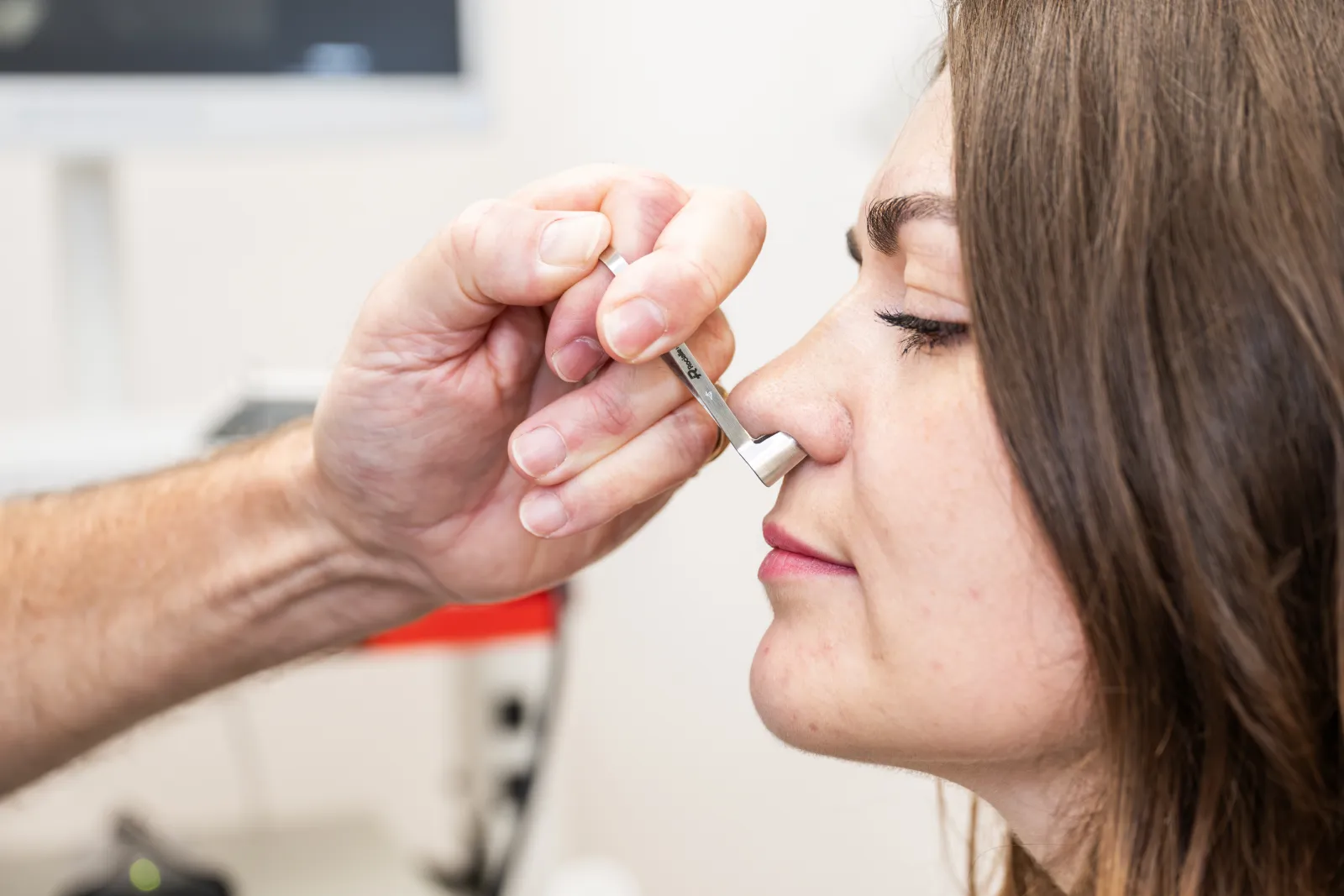
What is septoplasty?
The nasal septum is the partition dividing the inside of the nose into the right and left sides. It is made up of hard bone at the back, and flexible cartilage at the front towards the tip. Twists and bends of this partition may cause your nose to feel blocked on one or both sides, and septoplasty is an operation on the inside of the nose to straighten the septum so that it sits back in the middle of the nose, which will improve the breathing through your nose.
What is the aim of septoplasty?
To improve the breathing through the nose by straightening the nasal septum, without changing the appearance of the nose on the outside. By unblocking the nose, septoplasty may improve snoring and sleep quality. It may also be used to improve access to the sinuses on the inside of the nose if an operation on the sinuses is needed at the same time. If the nose is twisted on the outside as well as the septum being bent on the inside, the nasal bones may need to be reset as well as the septum, via a septorhinoplasty, to achieve optimal results (please see our Rhinoplasty leaflet for more information).
How is the operation done?
Septoplasty is carried out with you asleep (general anaesthetic), and takes between half an hour and an hour. Cuts are made inside your nose, so there are no visible scars or bruising on your face. On very rare occasions, where the nasal septum is very badly twisted, a small cut across the bridge of skin between the nostrils at the bottom of the nose may be necessary. The twisted parts of the nasal septum are straightened by removing small amounts of bone and cartilage from the septum which are not needed. The septum is then held in place with internal dissolving stitches.
What happens after the operation?
The surgery is carried out as a day case under a short general anaesthetic. You will be discharged from hospital the same day as your surgery, after waking from the anaesthetic, as soon as you are mobile and have had something to eat. You will be given comprehensive post-operative care instructions on discharge, and in general will be seen again in outpatients 4 to 6 weeks after surgery. The only exception is if small sheets of plastic are placed inside the nose at the end of the operation to prevent scar tissue forming as the nose heals; these are usually removed in the outpatient department one week after surgery.
Your nose will feel stuffy for two weeks following your operation, and it may take six weeks for your breathing to become clear. As your nose will feel blocked and you will be breathing through your mouth, you may have a dry throat — drink plenty of clear fluids if this is the case. If you have to sneeze, do so freely through your mouth without ‘bottling it up’ in your nose. You should avoid smoky or dusty surroundings.
A small amount of blood-stained mucus from the nose is quite normal during the first week or two, and you will be given a decongestant nasal spray on discharge from hospital for the first seven days to help. It is important not to blow the nose, or to cough and strain, during the first week to prevent bleeding. You should avoid strenuous activity, sports or exercise for about 2 to 3 weeks, as this may cause discomfort and bleeding. You will need to be off work for two weeks following your operation, but possibly longer if your work is strenuous or involves a lot of lifting.
Does it hurt?
Your nose will be slightly uncomfortable and blocked due to the inevitable short-term swelling of the nasal lining following your operation, but is not usually painful. Paracetamol is usually sufficient if required, but try to avoid aspirin-containing drugs, which may thin the blood and cause bleeding.
Does septoplasty have any risks or complications?
Septoplasty is a commonly performed operation and is very safe, but as with any operation involving a general anaesthetic it carries a small risk. This risk is greater if you are in poor general health and have serious long-term medical conditions such as heart disease or diabetes. Possible risks with septoplasty are:
- Bleeding from the nose, which may require you to return to hospital and your nose to be packed if profuse. This is extremely rare.
- Infection in the nose, usually requiring antibiotic treatment.
- Septal perforation. If the septum does not heal fully following your operation, a hole may be left in it between one side of the nose and the other. Usually this will not cause any problems, but may cause minor intermittent nosebleeds or crusting, and sometimes a whistling sound when you breathe through the nose. If troublesome, it may be possible to repair the hole later via a second operation.
- Scar tissue may form between the septum and the side wall of the nose as the septum heals. This may need to be treated by further minor operations, usually in the outpatient department with local anaesthetic, or occasionally with a further general anaesthetic.
- Alteration of the shape of the nose may occur up to some months following septoplasty, as the nose heals fully. There may be subtle dips or depressions in the bridge of your nose, the shape of the tip, or the skin bridge between the nostrils. If they happen, these changes are usually minor and don’t need any treatment, but if noticeable they can be corrected by another operation later.
- Numbness of the upper teeth very occasionally occurs, but often settles with time.