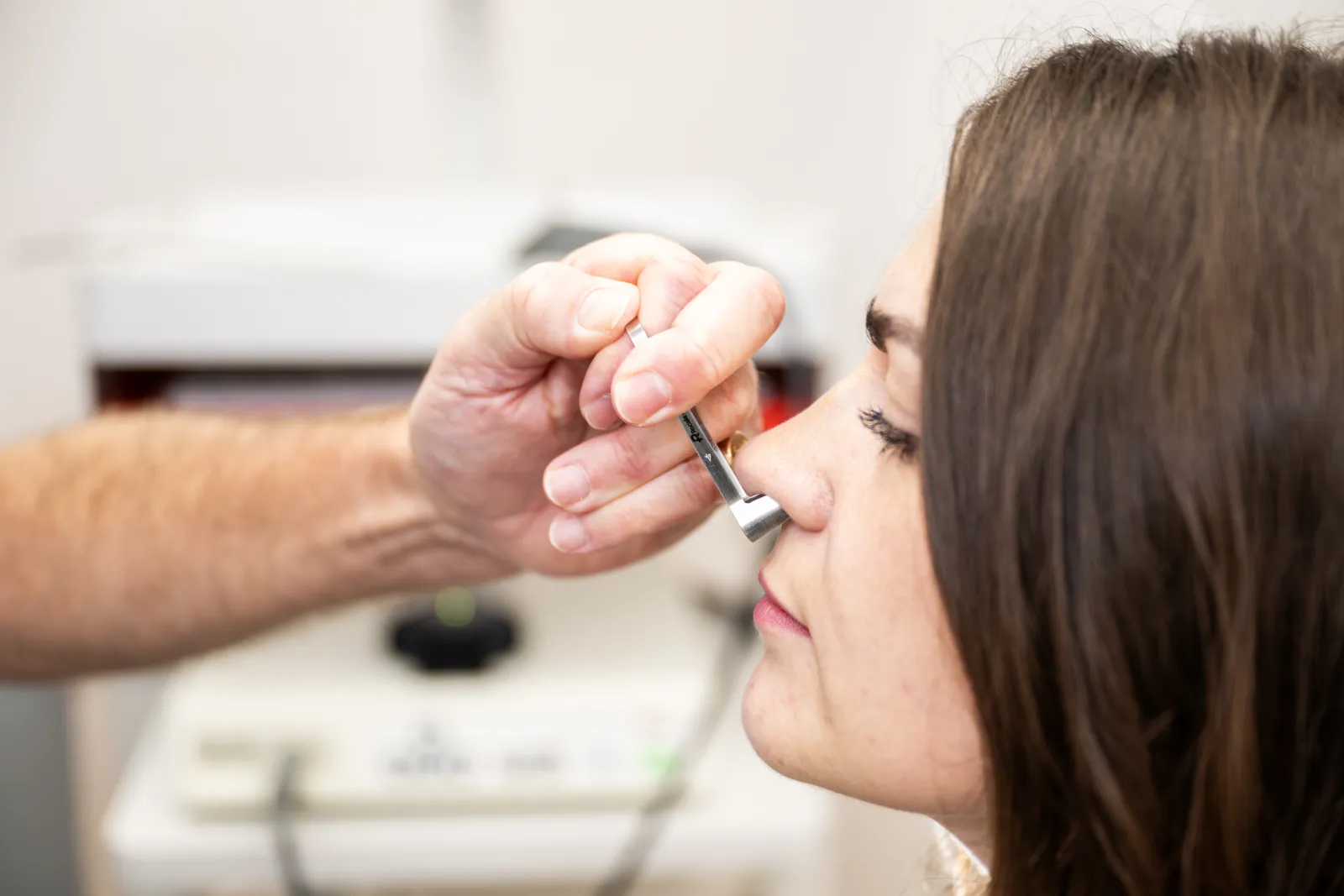
What are the nasal turbinates?
They are swellings on the internal sidewall of the nose on each side. There are three sets (the superior, middle and inferior turbinates) on each side, and they are responsible for warming and humidifying the air you breathe in through your nose. The turbinate is made up of bone and nasal lining, and as part of rhinitis, the lining part of the turbinates (in particular, the lowermost inferior turbinates) may swell markedly and cause blockage of your nose. The swelling may well reduce with medical treatment such as steroid nasal sprays as directed by us, but occasionally surgical reduction of the turbinates may be necessary to unblock your nose if these don’t work, or if you wish to avoid using such sprays permanently.
What is the point of reducing the size of my turbinates?
To improve the nasal airway and therefore increase the amount of air you are able to breathe in through your nose. As a knock-on effect, unblocking the nose may well aid snoring and improve sleep quality for you and your sleep partner. Your sense of smell may improve, as you are once again able to breathe in aromas through the nose more effectively. A blocked nose can also have an obstructive effect on the Eustachian tube at the back of your nose, causing a feeling of blocked ears; this can be helped by the operation, as your nose will be clearer as a result.
How are the turbinates reduced in size?
There are many described techniques for reducing turbinate size, but many current methods such as lasering or diathermising (electrical cautery) have only short-term benefit, as the turbinate tissue regrows rapidly. Techniques such as cutting out or trimming the turbinates are more successful, but can lead to persistent dryness and crusting in the nose, and the risk of bleeding after surgery is also greater.
We generally perform two techniques, depending on your individual findings at the time of surgery. These have proven long-term effects on the nasal airway, but without the side effects of the other methods:
- Powered endoscopic turbinoplasty — the inferior turbinates are reshaped under careful endoscopic guidance inside the nostril using a powered shaving tool. It has the advantage of being a bespoke procedure according to the composition of your individual turbinate: exactly the right amount of tissue and bone is removed, and the resultant improvement in your breathing is therefore permanent. As the procedure is modified according to the structure of your turbinates, long-term preservation of normal turbinate function is achieved.
- Sub-mucous out-fracture of the inferior turbinate (SMOFIT) — sometimes the turbinate itself is particularly bony and the lining part not particularly inflamed. If so, the turbinate can be gently repositioned sideways inside the nasal cavity, so that it has less of an effect in blocking the central nasal airway.
How is the operation done?
It is performed under general anaesthetic, and is often combined with another operation such as a septoplasty or functional endoscopic sinus surgery (FESS), with or without balloon sinuplasty, as required. Dissolvable dressings are used inside the nose at the end of the surgery, and bleeding is usually minimal after you wake up. You are discharged from hospital the same day, once you are awake and mobile after your anaesthetic.
Your nose will feel somewhat stuffy for two weeks following your operation (but often better than what you are used to, straight away), and it may take six weeks for your breathing to become clear. As your nose will feel blocked and you will be breathing through your mouth, you may have a dry throat — drink plenty of clear fluids if this is the case. If you have to sneeze, do so freely through your mouth without ‘bottling it up’ in your nose. You should avoid smoky or dusty surroundings.
A small amount of blood-stained mucus from the nose is quite normal during the first week or two, and you will be given a decongestant nasal spray on discharge from hospital to help for the first seven days. It is important not to blow the nose, or to cough and strain, during the first week to prevent bleeding. You should avoid strenuous activity, sports or exercise for about 2 to 3 weeks, as this may cause discomfort and bleeding. You should not fly for six weeks after the operation. You will need to be off work for two weeks following your operation, but possibly longer if your work is strenuous or involves a lot of lifting.
Does turbinate surgery have any risks or complications?
Turbinate surgery is a commonly performed operation and is very safe, but as with any operation involving a general anaesthetic it carries a small risk. This risk is greater if you are in poor general health and have serious long-term medical conditions such as heart disease or diabetes. Possible risks with turbinate surgery are:
- Bleeding from the nose, which may require you to return to hospital and your nose to be packed.
- Infection in the nose, usually requiring antibiotic treatment.
- Scar tissue may form between the septum and the side wall of the nose as the nose heals. This may need to be treated by further minor operations, usually in the outpatient department with local anaesthetic, or occasionally with a further general anaesthetic.
- Persistent crusting may occur, but is very uncommon.
- The symptoms may return as the nasal lining regenerates, but this is much less common than it once was, using the evidence-based techniques described above.